Allan Macintyre
Skip to main content
  • Menu
  • <
  • Work
  • Publications
  • Bio
Cart
0 items £
Checkout

Item added to cart

View cart & checkout
Continue shopping
Menu


  • Vulkan- This ongoing project grew out of multiple visits to volcanic environments, beginning in 1995 when I received a Fulbright...

    Vulkan-

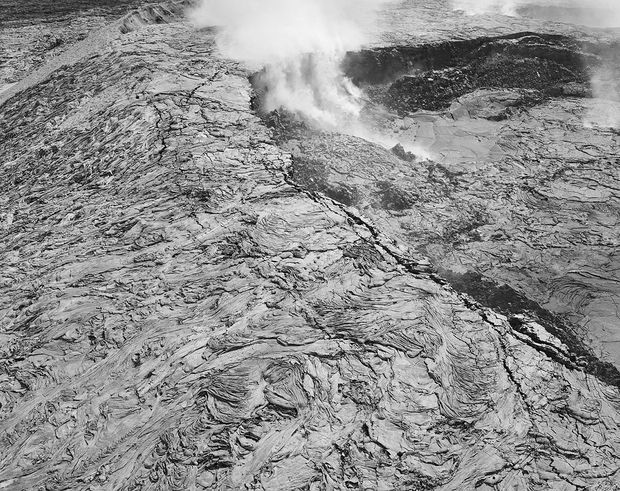
    This ongoing project grew out of multiple visits to volcanic environments, beginning in 1995 when I received a Fulbright Grant to photograph the Taupō Volcanic Zone with an 8x10 camera. Stretching across New Zealand’s North Island from Whakaari Island to the vast flooded caldera of Lake Taupō, the region is shaped by the immense pressure generated through the collision of the Australian and Pacific tectonic plates. I experienced its volatility firsthand when Mount Ruapehu erupted, evaporating the large lake in its summit crater.

    Over time, these journeys expanded to include Hawaii, Iceland, and Montserrat, dynamic landscapes that reveal their transformations through multiple visits. In these places, I found an inversion of the familiar narrative: instead of humans altering the planet, the planet alters itself.

    One of my primary interests in these environments has been discovering and cataloging naturally occurring sculptures. I am particularly drawn to mimetoliths, a form of pareidolia in which the mind perceives faces or anthropomorphic shapes in rocks and other inanimate objects. To me, these geological formations embody the creative essence of a volcano. Encountering them feels esoteric, with a landscape revealing a hidden language of forms.

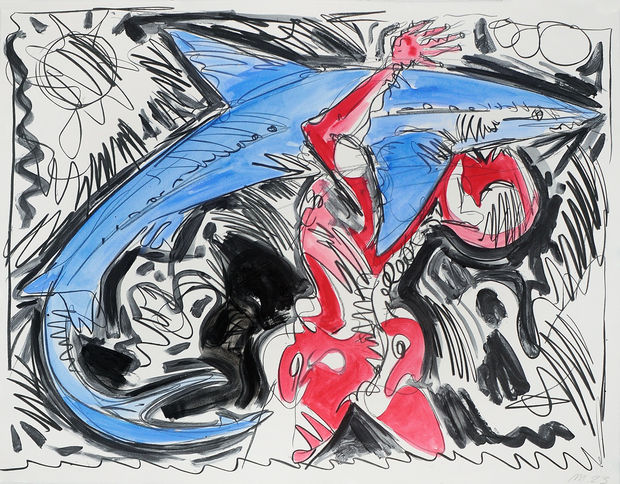
    The project has grown beyond fieldwork to include drawings and prints of imaginary eruptions and microscopic explorations. At Royal Holloway, University of London, and at Princeton’s IAC lab, I photographed reticulite and crystals forming within a lava sample I brought back from Hawaii, a small universe discovered inside the rock. From vast calderas to crystalline structures invisible to the naked eye, the work traces an evolving arc of transformation, where the Earth is both artist and subject, perpetually reshaping itself.


  • Oceanology- In 2011, I began experimenting with large-format cameras in specially designed waterproof housings to document coral reef environments. This...
    (Click on images to enter)

    Oceanology-

    In 2011, I began experimenting with large-format cameras in specially designed waterproof housings to document coral reef environments. This process-driven work, partly guided by chance, involves capturing a single image per dive and often superimposing multiple exposures onto a single sheet of film during each descent. To reflect the complexity of marine ecosystems, I have also explored combining positive and negative images from different dives. This approach draws inspiration from the early 20th-century German photographer Heinz Hajek-Halke, whose kinetic montages merged positive and negative forms.

     In 2022, I started using a digital camera underwater to create grid-based images. Some of these photographs have been printed, drawn on, and rephotographed using an 8x10 camera in garden settings, accentuating the surreal beauty of the undersea world.

     This series has personal significance, as it began during trips to assist my father, a marine sedimentologist who studied coral reefs, as he approached retirement. Over the course of his career, the collapse of reef ecosystems has been devastating, and the scope of this disaster is particularly acute for those who have dedicated their lives to studying them.

      In much of my work, I pair photographs with paintings, prints, and drawings, often depicting sharks. These creatures have become a personal totem, symbolizing the immense pressures facing ocean ecosystems. Encountering a shark underwater, I feel less fear and more awe at their sheer beauty. Sharks have occupied the  Earth’s oceans for hundreds of millions of years, and it is tragic to see so many species  endangered today.

  • Liquid Magnet- I first encountered ferrofluid in 2007 after watching an MIT video posted online. Ferrofluid is a highly magnetized...

    Liquid Magnet-

    I first encountered ferrofluid in 2007 after watching an MIT video posted online. Ferrofluid is a highly magnetized liquid composed of nanoscale ferromagnetic particles suspended in a carrier fluid, capable of dramatically altering its form in the presence of a strong magnetic field. Fascinated by its ability to morph into shapes that feel at once cellular and celestial, I began making drawings with ferrofluid on large sheets of film.

    While producing these ferrofluid photograms, I was also photographing in Japan, working primarily in street photography using 35mm and 8×10 cameras. The 8×10 camera was fitted with a circular mask that allowed for dual exposures on a single sheet of film, resulting in improvised photo collages that merge images from different moments and contexts. Although the central images were photographed in Japan, many of the surrounding backgrounds originated as iPhone images that were printed and then rephotographed using the view camera.

    The pairing of solar-like ferrofluid photograms with my photographs from Japan was inspired by stories of Amaterasu, the Shinto sun goddess, particularly the myth of the Heavenly Rock Cave, in which she is lured from her dark retreat to restore light to the world. As I researched Shinto beliefs, my curiosity deepened around kami spirits, embodiments of both the generative and destructive forces of nature. I became especially drawn to yōkai and obake, shape-shifting beings that blur the boundary between the human and the supernatural, much like Scotland’s selkies, who transform between seal and human form and similarly evoke themes of transformation, mystery, and coexistence with the natural world.


  • Hubbub- After graduating from college, I purchased an old 1950s 8x10 Deardorff camera. It was in rough shape, looking as...

    Hubbub-

     After graduating from college, I purchased an old 1950s 8x10 Deardorff camera. It was in rough shape, looking as though it had been dragged across pavement a few times, but I was drawn to its character. I wanted an 8x10 camera because no other device captures the world quite the same way, and many of my photographic heroes used them. I've had this camera since I was 23, and it remains my workhorse to this day.

     This series is a collection of experiments created primarily around my home. Alongside the photographic images taken with the view camera, I've included a selection of drawings made during the same time period.


  • Sugar Pepper- My grandparents moved from Scotland to the Caribbean island of Barbados in 1939, and many of my relatives...

    Sugar Pepper-

    My grandparents moved from Scotland to the Caribbean island of Barbados in 1939, and many of my relatives still live there. One of my cousins runs a small family farm in the island's interior, which I’ve had the opportunity to document over the years. The farm has become a laboratory for my photographic work, drawing me to its rich plant life and the striking contrast between the cultivated crops and the wild plants growing in the gullies around the fields.

     Barbados still maintains an active sugar industry, though it faces significant challenges in the global market. The island’s last operational sugar factory, Andrews Sugar Factory, recently closed. It was an antiquated facility filled with a maze of pipes and gears for crushing sugarcane. The leftover cane, known as "bagasse," was burned in massive furnaces to power the factory's steam engines, some of which dated back to the 19th century.

     During my visits to Barbados, I often feel compelled to create spontaneous sculptures from found objects , an instinctive, playful practice I find hard to resist, and a way of leaving my mark on the landscape.

  • R.O.- This work represents a collection of random observations captured with a 35mm camera over the years in various locations....
    R.O.-

    This work represents a collection of random observations captured with a 35mm camera over the years in various locations. I still find great satisfaction in using film. Its unpredictability adds an element of surprise—you can run it through the camera twice, get 36 chances, and never quite know what the final result will be. There are always unexpected revelations.

     Film also mirrors the way I see the world. While digital cameras offer a cold, hyper-sharp perfection, the 35mm camera produces a sketchy, dreamlike haze that feels more connected to memories.


  • Paleo- This early body of work investigates the concept of time by documenting archaeological excavations and museum spaces that house...

    Paleo-

    This early body of work investigates the concept of time by documenting archaeological excavations and museum spaces that house dinosaur fossils and meteorites. Each subject marks a single moment along a vast timeline.

    Modern Homo sapiens are thought to have emerged around 190,000 B.C.E., a relatively recent development when viewed against the backdrop of Earth’s 4.5-billion-year history. As a result, much of archaeology focuses on the near end of this continuum.

    But how do we begin to grasp 200 million years ago, in the Jurassic period? Or 4.5 billion years ago, when some meteorites were forged in the cold vacuum of space?

    Fossils and meteorites are more than scientific specimens, they are charged objects that embody what geologists call “deep time.” They bear witness to cataclysmic events that reshaped the planet long before us, and continue to shape how we understand its story. These remnants of extinction, impact, and transformation remind us of the immensity of the past and the brevity of our own moment within it.

Copyright © 2026 Allan Macintyre
Instagram, opens in a new tab.